£100 Energy Payment Scotland 2026: Bands A–D Explained
Will Scottish homeowners get the £100 energy payment? Find out who could qualify, Council Tax bands A–D and how new windows can cut heating costs.

Will Scottish Homeowners Get the New £100 Energy Payment? Council Tax Bands A–D Explained
Published: 28 October 2026 | By Homesealed | Glasgow & Central Scotland
Millions of households across the UK are looking for answers following today's announcement of a new £100 energy payment.
The UK Government confirmed on 28 October 2026 that eligible households in England living in Council Tax bands A to D will receive £100 towards rising energy costs from January 2027.
But what about homeowners in Scotland? Will households in Glasgow, East Kilbride, Lanarkshire and surrounding areas receive the same payment?
The good news is that the Scottish Government has confirmed its intention to provide similar £100 support. However, Scottish households are still waiting for the final eligibility rules and payment details.
At Homesealed, we understand how important managing heating costs has become for Scottish homeowners. As a window and door installation company based in East Kilbride, we also know that financial support is only one part of keeping a home affordable to heat.
In this guide, we'll explain what has been announced, which Scottish Council Tax bands could qualify, how to check your band, and how energy-efficient replacement windows could help lower your heating bills for years to come.
Will Scottish Households Receive the £100 Energy Payment?
The Scottish Government has confirmed that it intends to pass on a one-off £100 energy payment to Scottish households. However, the precise eligibility criteria, application process and payment dates have not yet been announced.
The UK Government's scheme applies to eligible households in England and is expected to reach up to 20 million households.
Scotland, Wales and Northern Ireland will receive additional funding to deliver support through their devolved governments.
Speaking after the Chancellor's announcement, Scotland's Deputy First Minister and Finance Secretary, Jenny Gilruth, confirmed that the Scottish Government was seeking to replicate the payment on a like-for-like basis.
She also indicated that further details would be announced as part of the Scottish Budget on 3 December 2026.
This means Scottish homeowners should not assume that English payment rules will automatically apply to them.
For now, the important points are:
- A £100 payment has been confirmed for qualifying households in England.
- The Scottish Government intends to provide similar one-off support.
- The exact Scottish eligibility rules remain to be confirmed.
- Scottish payment dates and arrangements have not yet been announced.
- Homeowners should wait for official Scottish Government guidance before attempting to claim.
Sources: UK Government, Autumn Budget 2026; STV News and PA Media, 28 October 2026.
Which Council Tax Bands Qualify for the £100 Energy Payment?
In England, the UK Government has confirmed that households in Council Tax bands A, B, C and D will qualify, provided they meet the scheme's other conditions.
The Scottish Government has indicated that it intends a similar approach, although the final Scottish conditions are still awaited.
Understanding Council Tax Bands A–D in Scotland
An important detail for Scottish homeowners is that Scottish Council Tax bands are based on property values from 1 April 1991, not what your home is worth today.
According to the Scottish Assessors Association, the valuation bands are:
Council Tax BandProperty valuation as at April 1991
Band A Up to £27,000
Band B Over £27,000 to £35,000
Band C Over £35,000 to £45,000
Band D Over £45,000 to £58,000
Band E Over £58,000 to £80,000
Band FOver £80,000 to £106,000
Band G Over £106,000 to £212,000
Band H Over £212,000
Source: Scottish Assessors Association, Council Tax Bands.
These figures often surprise homeowners.
For example, a three-bedroom semi-detached house in East Kilbride, Hamilton or Paisley could be worth considerably more today than its original 1991 valuation.
That does not automatically move the property into a higher Council Tax band.
Likewise, a traditional Glasgow flat may fall into Band B, C or D despite having a substantial current market value.
Property values, sizes and Council Tax bands vary across Scotland. You should always check the individual property's official band rather than assuming eligibility based on its location or current value.
How to Check Your Council Tax Band in Scotland
Checking your band is straightforward.
You can find it on your annual Council Tax bill or by searching for your property on the Scottish Assessors Association website.
The official search allows you to enter your postcode or address to find your registered valuation band.
This applies whether you live in Glasgow City, East Renfrewshire, East Dunbartonshire, North Lanarkshire, South Lanarkshire, Edinburgh or another Scottish council area.
If your home is in Band A, B, C or D, you may fall within the group intended to benefit from the Scottish payment, subject to the final rules.
When Will Scottish Homeowners Receive the £100?
This is one of the biggest unanswered questions.
For England, the UK Government has confirmed payments will begin in January 2027.
Households paying Council Tax by Direct Debit are expected to receive the money automatically into their bank account. Other eligible households will be invited by their local authority to provide the necessary details.
These are the arrangements for England, not yet confirmed arrangements for Scotland.
Scottish councils, including Glasgow City Council, South Lanarkshire Council and North Lanarkshire Council, may have a role in delivering the scheme, but homeowners should wait for official confirmation.
There is currently no need to submit an application for the new Scottish £100 payment.
Be cautious of unexpected messages or websites claiming you must pay a fee or urgently provide bank details to receive it.
Why Energy Bills Remain a Concern for Scottish Homeowners
Any additional help with energy costs is welcome, particularly heading into the coldest months of the year.
However, £100 is a one-off contribution. It will not permanently change how much energy your home needs to remain warm.
Scotland's colder winter weather, older housing stock and varied property styles mean heating efficiency is an important consideration.
From traditional sandstone tenements in Glasgow to post-war family homes in East Kilbride and older detached properties throughout Lanarkshire, different buildings lose heat in different ways.
The Scottish Government's fuel poverty modelling published in September 2026 estimated that approximately 820,000 Scottish households could be in fuel poverty during October to December 2026.
That represents around 32% of all Scottish households in the model.
It highlights why helping people manage energy costs matters, but also why longer-term improvements to home energy efficiency deserve attention.
One area worth examining is the condition of your windows.
How New Double Glazing Can Help Scottish Homeowners Save Money
Windows are an important part of a home's thermal performance.
Older single-glazed windows, poorly insulated frames and worn window seals can all contribute to heat loss.
When your home loses heat, your heating system must work harder to maintain a comfortable indoor temperature.
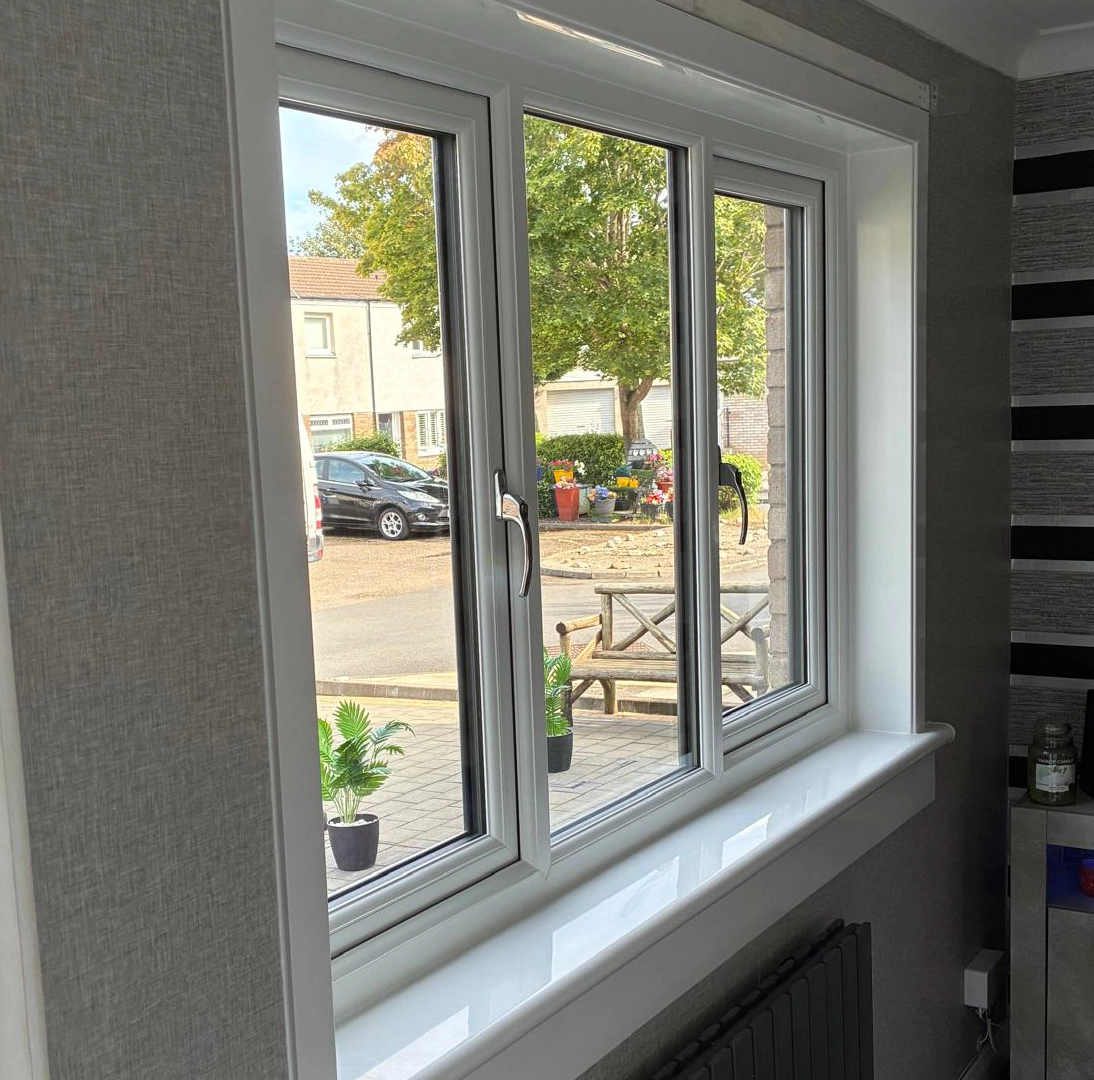
Modern energy-efficient double glazing helps reduce the amount of heat escaping through your windows.
Double-glazed units typically use two panes of glass separated by an insulating gap, which may contain argon gas. Combined with suitable frames, seals and installation, this can improve thermal performance compared with older windows.
How Much Could You Save by Replacing Old Windows?
The Energy Saving Trust provides a useful independent estimate.
Replacing all the single-glazed windows in a typical semi-detached, gas-heated property with A-rated double glazing could save approximately £85 per year on energy bills in Great Britain.
This is an illustrative national estimate, not a guaranteed saving for every Scottish home.
Your actual savings will depend on:
- Whether your existing windows are single or double glazed.
- The size, age and design of your property.
- The type and efficiency of your heating system.
- Your energy tariff and heating habits.
- The energy performance of the replacement windows.
- How well your new windows are installed.
For homeowners who already have reasonably modern, functioning double glazing, the financial savings from replacing it may be considerably smaller.
That is why getting an honest assessment of your existing windows is important before making a decision.
Source: Energy Saving Trust, Energy Efficient Windows and Doors.
Why Better Windows Matter in Glasgow and Central Scotland
At Homesealed, we work with properties across Glasgow, East Kilbride and surrounding parts of Central Scotland.
Different areas bring different challenges when it comes to replacing windows.
Traditional Glasgow Properties
Older sandstone flats and tenements, particularly in parts of Glasgow's West End and Southside, may still have single-glazed windows or ageing glazing.
Upgrading these windows can improve comfort, reduce cold spots and help limit heat loss.
For listed buildings and conservation areas, homeowners may need to consider additional planning or consent requirements. Secondary glazing can also be an option where retaining original windows is important.
East Kilbride and Lanarkshire Family Homes
Many family homes in East Kilbride, Hamilton, Motherwell, Blantyre and Cambuslang have windows installed many years ago.
Even where double glazing is already fitted, ageing seals, damaged frames or failed sealed units can affect performance.
Signs of problems include:
- Cold draughts around closed windows.
- Condensation or misting between the panes of glass.
- Damaged seals or deteriorating frames.
- Difficulty closing or locking windows properly.
- Rooms that feel noticeably colder near windows.
Not every problem requires a complete replacement. Sometimes a repair or adjustment may be sufficient.
Where the existing units are beyond economical repair, modern double glazing in East Kilbride can help improve comfort and reduce unnecessary heat loss.
What Makes Modern Windows More Energy Efficient?
When comparing replacement windows, it is worth looking beyond their appearance.
The overall energy performance of a window depends on several features.
Double or triple glazing: Additional panes and insulating cavities help reduce heat transfer compared with single glazing.
Low-emissivity glass: Special coatings help reduce heat escaping through the glass.
Insulated frames: Modern multi-chambered uPVC frames are designed to limit heat transfer.
High-quality seals: Effective weather seals help prevent unwanted draughts.
Correct installation: Even a highly rated window can underperform if it is fitted incorrectly or poorly sealed around the frame.
You may also come across a measurement called a U-value. This measures how readily heat passes through a window. Generally, a lower U-value indicates better insulation.
At Homesealed, we supply and install energy-efficient Liniar window systems designed to provide excellent thermal performance.
Our double-glazed windows in Glasgow are available in a range of styles suited to both modern homes and traditional properties.
If you're comparing quotations, ask for the whole-window energy rating and U-value of the specific product being offered.
Can Scottish Homeowners Get Financial Help Towards New Windows?
Yes, some homeowners may qualify for separate financial assistance to improve their windows.
This is different from the newly announced £100 Household Energy Payment.
Home Energy Scotland Interest-Free Loan for Glazing
Home Energy Scotland currently offers eligible homeowners an interest-free loan of up to £8,000 for double, triple or secondary glazing, subject to the scheme's conditions.
There are important restrictions:
- Funding is available for improving existing single-glazed windows.
- It does not cover replacing or upgrading existing double, triple or secondary glazing.
- This is loan funding, not a glazing grant.
- A qualifying Energy Performance Certificate recommendation is required.
- Credit, affordability and other eligibility checks apply.
- Funding is subject to availability.
- Work must not begin before the required written funding offer is received.
The scheme also has an administration fee for loans, despite the borrowing being interest-free.
Homeowners should contact Home Energy Scotland directly to check their eligibility before committing to improvements.
Source: Home Energy Scotland, Grant and Loan Scheme, checked 28 October 2026.
Five More Ways to Reduce Heating Costs This Winter
While replacement windows can make a long-term difference, there are also inexpensive steps Scottish homeowners can take immediately.
1. Check window seals and draughts. Look for unwanted airflow around frames, particularly on windy days. Home Energy Scotland estimates simple draught-proofing around windows and doors could save around £25 annually.
2. Close curtains at dusk. Thick, well-fitting curtains can reduce heat loss overnight. Avoid covering radiators or blocking necessary ventilation.
3. Check your loft insulation. Insufficient insulation can allow heat to escape through the roof. Improving loft insulation may be a more cost-effective first step than replacing windows in some properties.
4. Use heating controls effectively. Programmable thermostats and radiator controls can help avoid heating rooms unnecessarily.
5. Check your home's EPC. A Scottish Energy Performance Certificate can identify recommended improvements and help you prioritise spending.
For impartial guidance, Home Energy Scotland offers free home energy advice and tools to assess potential improvements.
Frequently Asked Questions About Scotland's £100 Energy Payment
Is the £100 energy payment definitely coming to Scotland?
The Scottish Government has confirmed its intention to provide a £100 payment to Scottish households. The final scheme details are still awaited as of 28 October 2026.
Will Scottish homeowners in Council Tax Band D qualify?
The Scottish Government is seeking to replicate the English payment. Band D is included in England, but the final Scottish eligibility rules have not yet been published.
Do I need to be receiving benefits to qualify?
The English payment is linked primarily to Council Tax band and household circumstances, rather than being restricted to benefit recipients. Scotland's final conditions remain to be confirmed.
Will people living in rented properties receive the £100?
In England, qualifying households can include renters who are responsible for Council Tax at their main residence. Scottish arrangements have yet to be confirmed. The payment is not intended exclusively for property owners.
Do I need to apply for the Scottish £100 payment?
There is no confirmed Scottish application process yet. Follow official Scottish Government and local council announcements rather than responding to unsolicited payment messages.
Is the £100 payment the same as the Winter Heating Payment?
No. Scotland already has separate winter heating benefits for certain eligible households. The newly announced £100 Household Energy Payment is a different measure.
Can I use the £100 payment towards replacement windows?
The announced English payment is general household energy support rather than a dedicated home improvement grant. Scotland's final payment arrangements remain to be confirmed.
Is new double glazing worth it if I already have double glazing?
It depends on the condition and performance of your existing windows. Replacing efficient, undamaged double glazing purely to reduce energy bills may offer limited financial benefits. However, replacement could make sense if your windows are failing, draughty or difficult to operate.
Reduce Your Heating Costs for the Long Term With Homesealed
The new £100 energy payment is welcome news for households facing higher heating costs.
And with the Scottish Government intending to introduce similar support, many homeowners across Glasgow and Central Scotland will be watching closely for confirmation of the final arrangements.
But while a one-off payment may help with this winter's bills, improving how efficiently your home retains heat can deliver benefits for many winters to come.
At Homesealed, we help homeowners across Glasgow, East Kilbride, Lanarkshire, Paisley, Edinburgh and surrounding areas choose replacement windows suited to their property, needs and budget.
Whether you're dealing with older single glazing, worn window seals or windows that are simply past their best, our team can explain your options.
Thinking about replacing your windows?
Contact Homesealed for a free, no-obligation quotation, or call 0141 266 0032 to speak to our team.
You can also explore our full range of replacement windows.
Information correct as of 28 October 2026. Scottish Government payment eligibility and arrangements are subject to further official announcements. Energy savings are illustrative and depend on individual property circumstances.
Research and sources
- UK Government — Autumn Budget 2026, Household Energy Payment announcement, 28 October 2026.
- STV News — Scottish Government response to the £100 Household Energy Payment, 28 October 2026.
- PA Media — Jenny Gilruth's comments on replicating the payment, 28 October 2026.
- Scottish Assessors Association — Council Tax Bands and 1991 property valuation thresholds.
- Scottish Government — Fuel Poverty Scenario Modelling, September 2026.
- Energy Saving Trust — Energy Efficient Windows and Doors.
- Home Energy Scotland — Home Energy Scotland Grant and Loan, including glazing eligibility.
- Home Energy Scotland — How to Prepare Your Home for Winter.